TL;DR: Too much access can burn you. Scattered Spider shows how easy it is for attackers to misuse privileged accounts and weak identity checks. But any business, large or small, can be a target. 74% of breaches start this way. Strip back access, train your people, and rehearse your defences before your name makes the headlines.
Who is Scattered Spider and what makes them dangerous?
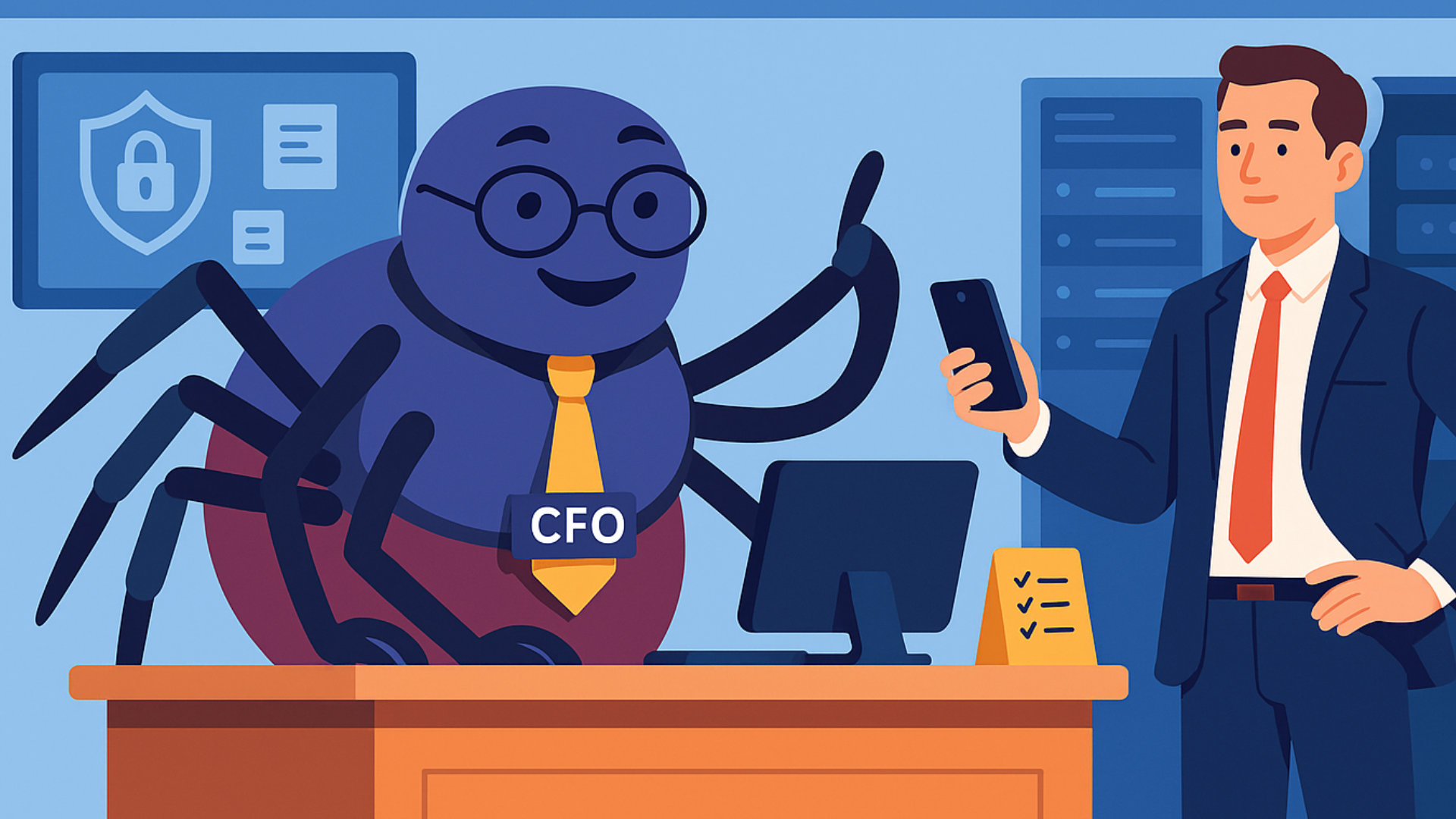
Picture this. Your CFO calls the help desk for an urgent reset. The voice sounds right. The details check out. Minutes later, someone you have never met is inside your network.
Scattered Spider is a prime example of how today’s attackers operate. They are fast, confident and they do not just break in quietly. They stay and push back if you try to block them.
What is a privileged account?
A privileged account is any login that has access to critical systems, sensitive data or your business infrastructure. If attackers get hold of one, they have the keys to everything.
According to Forrester, 74% of breaches involve a privileged account. Attackers know it is quicker to trick a real person than to hack a firewall. One convincing call can unlock everything.
How quickly can attackers misuse privileged accounts?
Once inside, the timeline is alarmingly short:
- Hour 1: The attacker maps out your network and finds valuable data.
- Hours 2–4: They create secret ways back in.
- Hours 5–8: They boost their permissions to reach deeper systems.
- Day 1–2: They spread to other devices, hunting for more opportunities.
- Day 3–4: They steal information or get ready to shut you down.
Scattered Spider is known for fighting back when discovered. More attackers are using the same “stay and sabotage” tactics too.
Can small businesses really be targets?
Yes. Sony Pictures is a famous example of how one privileged account can open the door to chaos. In Sony’s case, it led to leaked films, stolen emails and millions in damage.
But this can just as easily happen to a local business, a growing start-up or a family-run firm. Attackers do not care about your size. They care about how easy it is to get in.
How can you protect your business from privileged account attacks?
Mistakes happen. But good processes and clear checks stop one slip from turning into a crisis. If you want stronger protection, our cyber security services cover everything from threat detection to awareness training.
How can you reduce privileged account risks?
Keep access lean. Just because someone is senior does not mean they need full domain control. Audit admin accounts and remove anything unnecessary. If you need help reviewing and tightening up access, our IT support services make it easy to stay on top of it.
How can you make identity checks stronger?
A familiar voice is not enough. Add extra steps for resets. Train your help desk to pause when something feels too urgent or out of place.
How can you monitor privileged accounts?
Treat cloud consoles and virtual desktops like critical kit. Watch for surprise new machines or sudden permission changes.
Why should you practise your incident plan?
Attackers like Scattered Spider rarely give up easily. Run real-life drills so your team knows exactly what to do when someone tries to stay inside. Combine these practice sessions with regular cyber awareness training so your people stay sharp all year, not just once or twice.
Key takeaways
✔️ 74% of breaches start with privileged access. Keep it tight.
✔️ Big and small businesses can be targets.
✔️ Social engineering tricks people, not just systems.
✔️ A plan is good. Practising it and running cyber awareness training regularly is better.
Frequently asked questions
How do I check if our privileged accounts are at risk?
Start with an audit. Look at who has admin rights and remove anything unnecessary. Many businesses give senior staff extra access “just in case” and then forget about it.
Are privileged accounts really the biggest risk?
Yes. Forrester says 74% of breaches involve privileged access. Attackers love them because they unlock your whole system in one move.
How do I manage privileged accounts safely?
Use the principle of least privilege. Give only what is needed for the job. Review access regularly. For extra help, see our IT support services to learn how we keep access under control.
How often should we test our plan?
Run training sessions and “what if” scenarios at least twice a year. Top this up with regular Cyber Awareness training so your people know exactly what to look out for when a real trick appears.
Ready to tighten the locks and sleep better at night? Let’s talk. Or check out our latest blogs for more practical tips to protect your business.